In this article, let's dive in and understand how Jenkins pulls the code from Git, builds it, and then pushes it to AEM, deploying the artifact. Steps to follow Step 1: We need to have a running AEM Author and Publish instance. You can also use local author and publish instances for simplicity. If...
Page load time is one of the critical factors that significantly impacts the customer experience on your website, mobile site, or app. Customers will often abandon a site or app if a page takes too long to load. This can have a significant impact on key business metrics such as conversion rates,...
Why do we need a System or Service User? A system user is typically utilized by the AEM backend code which has privileges to create, read, update, and delete nodes in the JCR using a session. Developers have to close the session after the tasks are performed. If you forget to close the sessions...
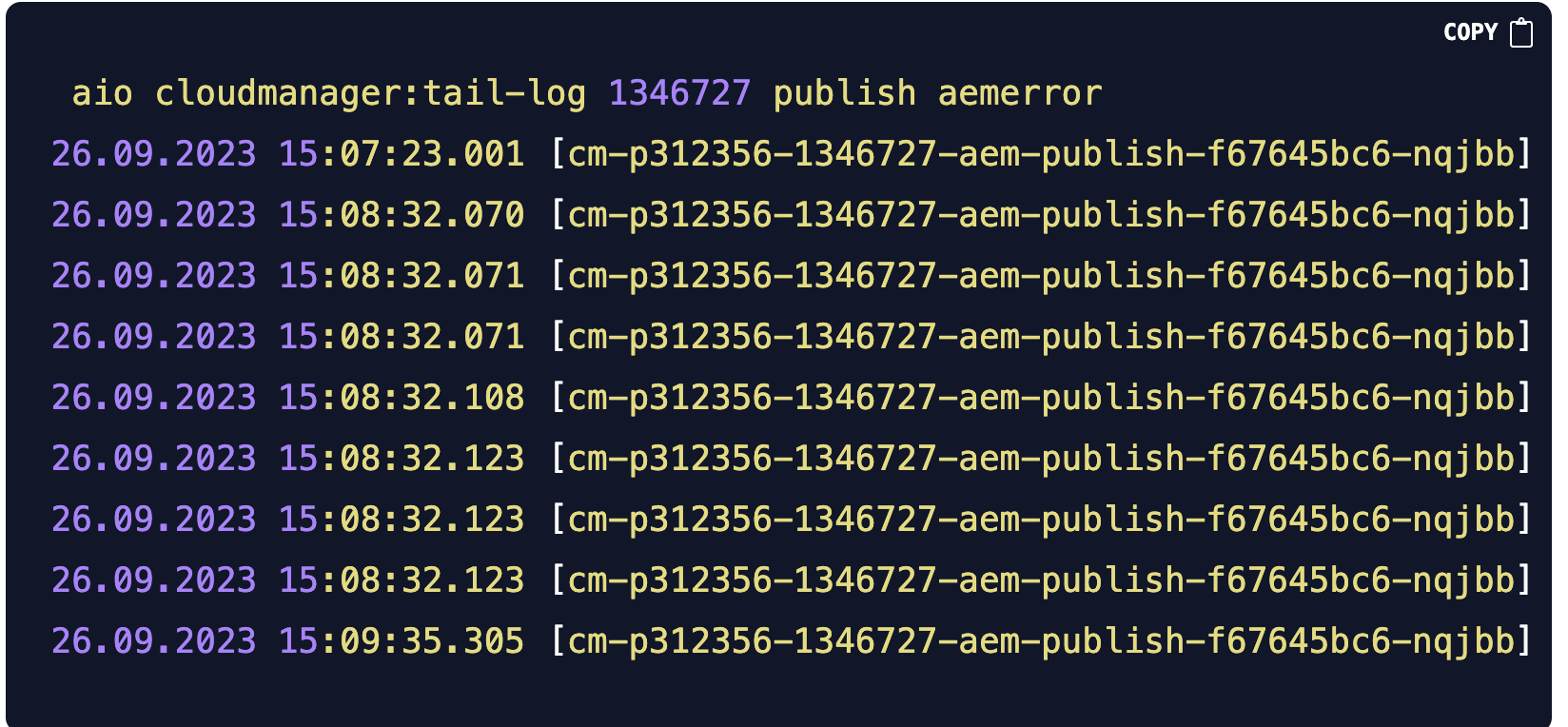
Tailing AEM (Adobe Experience Manager) logs in AEM Cloud Service is a common task for troubleshooting and monitoring purposes. AEM Cloud Service is a managed service provided by Adobe that runs AEM in a cloud environment, and accessing logs may differ slightly from an on-premises setup. Here's a...
Recently, I came across a requirement where we need to add rep:policy to a large number of nodes. We clearly understood that it wouldn't be possible to do it via the usual AEM GUI, as it would be time-consuming work. So, we tried doing it via the Groovy script, where we first found all the nodes...
It has been a while since google released Tensorflow support for java. Even though it is still in its infancy, I feel like it has everything we need. Build computation graphs - check, run session and compute stuff - check, GPU support - check. Now if you have all the time in the world to reinvent...