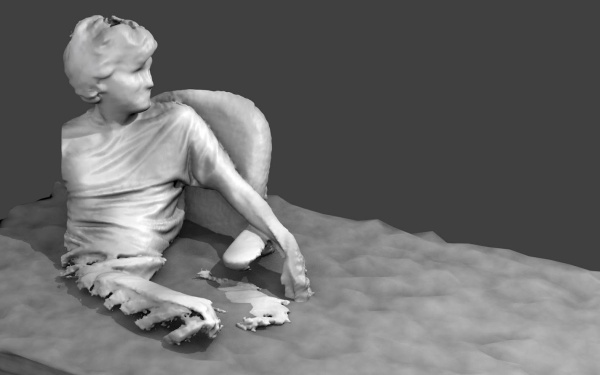
After working all weekend on getting PCL’s new KinectFusion and collecting cool voxel representations of my friend (and after fixing the bug patch), we got this rendering: We got this by setting the voxel size to be about upper-torso sized and then spinning my friend around on a chair. Thanks to...
So KinectFusion is an awesome new Microsoft algorithm for the GPU that essentially does real-time SLAM with Kinect RGBD cameras. They didn’t publish the source, but the WillowGarage PCL and OpenCV guys have been busy implementing it from the paper. And I must say, the beta versions so far in the...
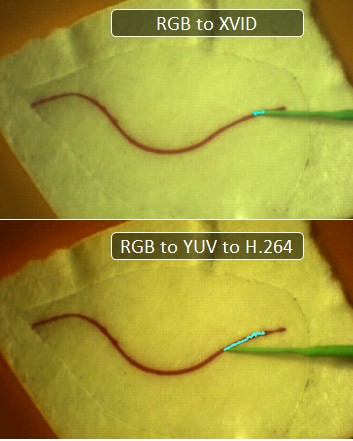
This post details my experiences with Intel’s hardware encoding Quick Sync functionality that is part of their new processors. I’ve spent the past three days struggling with the Intel Media SDK to implement encoding of video streams to H.264 and wanted to (a) document the experience and (b)...
Because my robot’s control system runs on a LabVIEW real-time machine, I have no recourse but to add new features in LabVIEW. Oh, I tried coding new stuff in C++ on another computer and streaming information via UDP over gigabit, but alas, additional latencies of just a few milliseconds are enough...
Thanks to Joydeep and Pras, Plinth now actually works under Mac & Linux (both x86 and x64). It turns out it was just some minor library and compilation issues that needed to be resolved. This means that that the helicopter visualizer now works on all three major platforms. Luckily, the MATLAB...
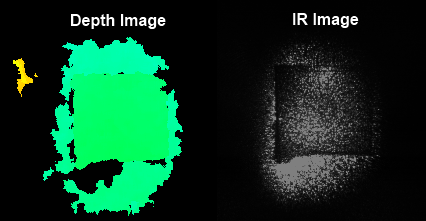
Microsoft, always the butt of nerd jokes with Windows and blue screens, has introduced a new device that will revolutionize robotics: the Kinect. It is a depth-camera using structured light that gives full 3D representations of indoor environments within 2 to 10 feet along with a normal camera...
I hate them. No seriously. They are terrible. In fact, I’ll go further and say that dealing with video programatically through C++ has plagued me for almost a decade now. The scenario is this: I’ve recorded some video from one of my experiments and now I want to post-process it and overlay some...
I’m sure unsigned int has had its place in the eons gone by; however, I think it’s outlived it’s useful lifespan. The number of times I’ve tried to do math with it and shot myself in the foot is quite astonishing. The root of the problem is you simply can’t do subtraction and expect sane results...
Operating rooms are scary places at the best of times, and when going under the knife, you’d like to know that a surgeon’s itchy nose or her morning’s double espresso isn’t going to cause any accidents. This is where medical robotics can ride in to the rescue. As a PhD student developing...
So this is twice that I have been upstaged by my lack of Google skills. I have some small background in compilers, languages close to the processor, and optimization. So when I see something obviously lacking in even rudimentary speed-ups, I think about taking a look and doing a better job myself....
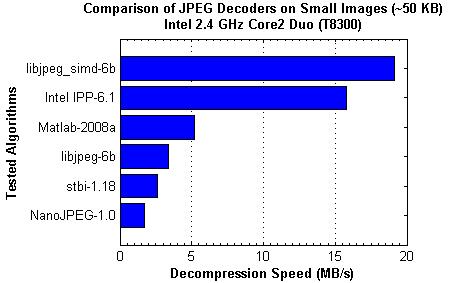
As a computer vision/controls grad student at CMU, I often work with very large image/video datasets. My latest project involves a terabyte or so of image data – all compressed in JPEG format to save space. I usually analyze the data in batches and am interested in maximum speed for minimum cpu...
So today I heard of a CMU graduate student who was interviewing with Microsoft and they asked him what the result of the following C code would be: int i = 10; printf(“%d %d %d\n”, i++, i++, ++i); First off, this is a dumb question to ask a student who is about to graduate with a PhD in robotics....