Pre-training any kind of good LLM is very, very expensive. Thankfully, we have scaling laws. Lilian Weng of Thinky writes: Scaling laws are one of the most critical empirical findings in deep learning. The observation is simple in form: the training loss decreases predictably as we scale up...
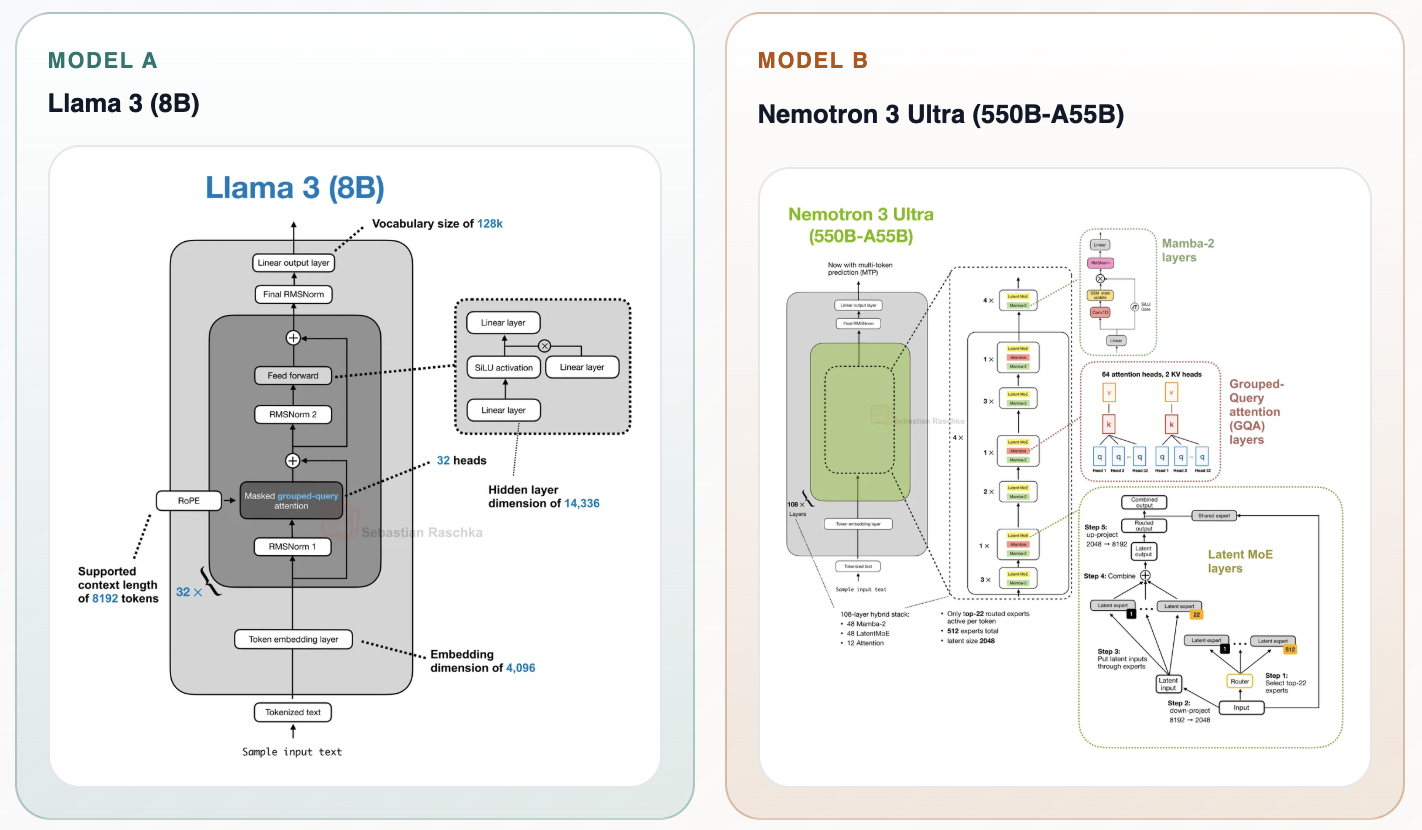
Back in 2022 and 2023 there were two big branches of machine learning happening at Meta1. The LLM work that led to Llama was a clean, smooth stack of repeated Transformer modules; the recommendation systems graphs were, by contrast, terrifying. Luckily, the industry has remedied that state of...
When we started building LLMs, we mostly focused on them knowing things. They had information encoded in their weights, and they could spit it out when given sufficient prompts. But an agent doesn’t just need to know things; it needs to combine several kinds of knowledge. A lot of that is still...
The capabilities in a large language model emerge, mysteriously, from the training data. Everyone agrees that you start with a big pile of data, add some compute, and at the end you can vibe code. Opinions differ on what that pile of data should look like. Microsoft AI recently released an...
There has been a lot of drama1 about distillation: how (closed) frontier models are being used by other labs to boost their own performance on particularly hard tasks. The drama is not fake, exactly. Anthropic, and recently OpenAI, have a notable lead in the agentic-coding domain, and some of...
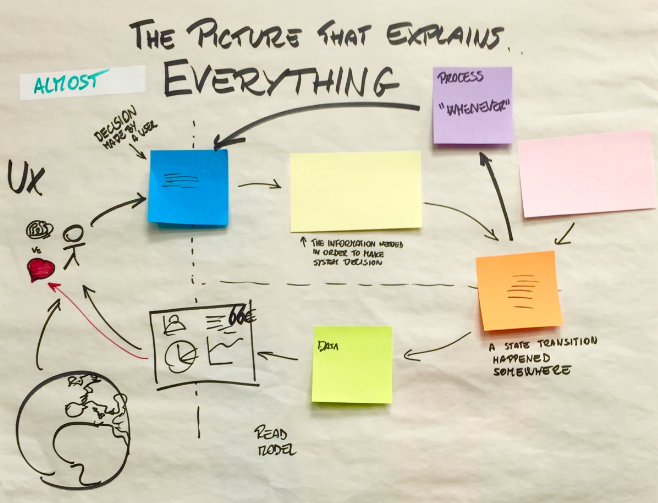
Since I started learning DDD and Event Sourcing in particular, I was always fascinated by the picture that explains everything by Alberto Brandolini. It describes an high level perspective on how to model domains using the elements of event storming. Briefly, it proposes to structure the flow...