Today's AI agents can call tools. They cannot evolve them.An agent built on any of the major frameworks operates in a hard split. On one side, there's the model: a reasoning engine that processes language, maintains context, and makes decisions. On the other, there's a set of tool definitions,...
I believe the most important value in a programming language is not performance, libraries, ecosystems, or tooling. While these are crucial to their adoption and success, a feature often overlooked is code comprehension. By this I mean: how easy is it for someone to read code and comprehend what...
In the previous two posts, I introduced Google's Go programming language and the model of concurrent programming that it adopts. We've seen that Google has made a number of interesting choices in the design of the language, and their approach to types is yet another. There are two key parts that...
Last time, I wrote about some of the interesting and unique design decisions regarding dependencies and imports in Google's Go programming language. This time, we're back to my favorite topic: concurrency. Because essentially all machines have multiple cores/processors now, every new language has...
I recently started learning more about Google's Go programming language, which has been on the radar for several years now and seems to be gaining more traction. I found this article to be a very insightful piece about the key design decisions and goals behind the language. At the philosophical...
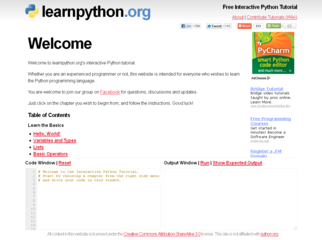
Dear Python, something has been bothering me for a while. Its just that, well, ummm…you’re kind of ugly. Look, you are beautiful inside: Python is a beautiful language and the Python community is open and welcoming. But Python resources are ugly enough to affect usability and adoption. This is...