Back in the early days of LLMs, it was a struggle to get structured output out of models, which made it hard to use the results in a programmatic way -- there was no well-defined interface. That problem was solved a while back, and now most inference systems support JSON schema outputs. As part of...
Running frontier LLMs is slow, but that's the tradeoff we make to get more intelligent output. But if you think about the text (tokens) that an LLM produces (or that a human produces, for that matter), you might have an intuition that a lot of it does not actually require high intelligence....
The world of GPU programming for AI has come a long way since I worked on writing a CUDA-based matrix library back in 2009. Both NVIDIA hardware and the CUDA ecosystem have evolved dramatically and are now the basis for the majority of AI compute in the world today (hence the $4T+ market cap)....
As LLMs become larger, more capable, and more ubiquitous, the field of mechanistic interpretability -- that is, understanding the inner workings of these models -- becomes increasingly interesting and important. Similar to how software engineers benefit from having good mental models of file...
Following up on the last post, I want to write about this new paper from NVIDIA on quantization-aware distillation. We learned about quantization last time, so let's talk about distillation now. Model distillation is the process of transferring knowledge from one model (the teacher) to another,...
With the rise of large language models and the desire to run them more cheaply and efficiently, the concept of quantization has gained a lot of traction. By representing the weights of the LLM with data types that use fewer bits, you reduce the necessary GPU memory to load the model and the memory...
So, new research shows that a) LLM-type “AI” chatbots are extremely persuasive and able to get voters to shift their positions, and that b) the more effective they are at that, the less they hew to factual reality. Which: Yeah. A bunch of us told you this. Again: the Purpose of LLM- type “AI” is...
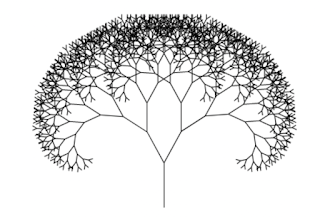
Preamble Fractal Tree (Wikipedia)A quiet causal inference revolution is underway in industry. We see immense success of transformers deep learning architectures. However their success should also be attributed to causal modelling. Large Language Models (LLMs), specially closed-sourced ones,...