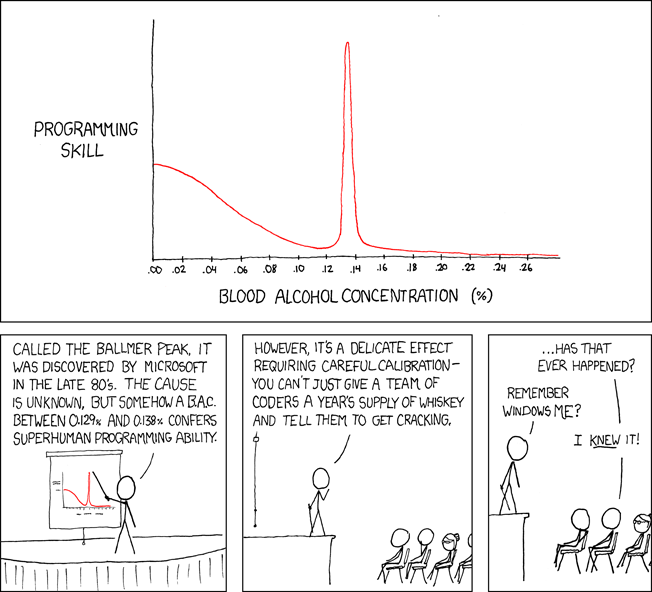
Last Friday I participated in my first SEN symposium, which gathers Software Engineering researchers from all across the Netherlands. I was one of the organizers, together with Gemma Catalino, Sebastian Junges, Jurgen Vinju, Tijs van der Storm, and Negar Alizadeh. The symposium had two keynotes...
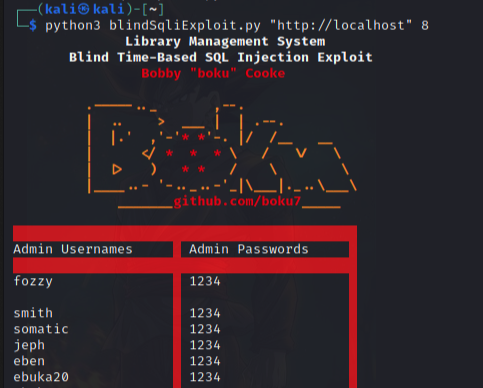
There is a saying that you don’t truly own a router until you flash your own firmware on it. The only problem was that the bootloader of my router was password protected. So I accepted the challenge :) Disclaimer - My ISP is the biggest one in Israel, and this is their newest router. They market...
Apologies for taking so long to follow up on the probability post. I was floored by its engagement on Hacker News, with over 200 thoughtful comments! I’ve revised the post to incorporate all your feedback. Now to unveil the secret behind that post: it was a part of my preparation for a very...
The story “The Day She Proved It” has been accepted to appear at The Mathematical Intelligencer, so now, after a few edits, you can read it over there! Enjoy. My thanks to the Intelligencer editors and referees.
It’s been over a year since my last blog post, even though I have tons to write about. Amidst the global pandemic we are all grappling with big questions about our career, and I am no different. Still, with SIGCSE tomorrow, I wanted to write up a little bit about an exciting project that my...
“If you want to go fast, go alone. If you want to go far, go together.” – African Proverb Research Question: “How can we improve the way we work together on hard problems?” How parents behave changes how kids behave. … Continue reading →
Happy October! October isn’t just any month … it’s ADHD awareness month! So you can bet this month the ADaptHD newsletter will be bringing you one study, one news article, and one coping tip. Study of the month: ADHD in childhood usually becomes ADHD in adulthood Finding a hobby you love...
Blog Contributors: Adeeb Shah @hyd3sec & John Jackson(@johnjhacking) About A while ago I took up the challenge to get Offensive Security Web Expert (OSWE) certified. During this journey I learned many awesome things. The most important lesson learned was that with source code and a debugger,...
You can’t analyze love, right? Psychology researchers would beg to differ. In fact, psychology studies can help us learn about the workings of romantic relationships, and a new study sheds light on the relationships of people with ADHD in particular. A team of psychology researchers in...
Sports might be just the kind of activity that the ADHD brain is made for. Competing in a sport provides ongoing stimulation and clear, immediate rewards. You don’t have to sit still, either – in fact, moving constantly is part of the job description! Swimmer Michael Phelps, the most...
ADHD doesn’t change, but our understanding of it evolves, and so do our methods of spreading awareness. This month’s ADHD news is a great example of that. We’ve got a study shining light on an underexplored symptom of ADHD, and an article describing the very 2021 experience of finding ADHD via...
Refereeing papers is one of those essential skills of a professional research mathematician that you are never taught how to do but, one day, you will find a referee request in your inbox. Suddenly, you are thrown into the world of refereeing without any proper training. In this blog post, I will...
If you ever feel like your mind is taking you on a ride you can barely keep up with, or like new thoughts are popping into your head faster than you can process them, you might be experiencing what psychologists call racing thoughts. Racing thoughts have long been known to be symptom of manic...
This blog post is based on a Twitter thread on the same topic. There is something about prime numbers… An air of mystery surrounds them, that makes them one of the most alluring (and most studied) objects in all of mathematics. Despite hundreds of years of prime number research, there is still...
This blog post is an excerpt of a new upcoming book that I am writing. Feedback and suggestions are welcome! In each era of the history of mathematics, there have been open problems and conjectures that mathematicians have paid particular attention to, maybe because of the intrinsic beauty of...
This video might take a few seconds to load. Please squint for best results :). The results of this experiment are not exactly close to my target as you can see, but I thought it was worth a blog post anyway. There was this rough idea I've been thinking about in Conway's Game of Life for a really...
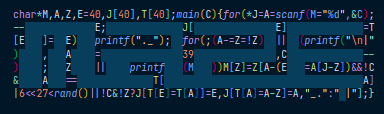
I was wandering in Wikipedia when I came across this interesting page https://en.wikipedia.org/wiki/Obfuscation_(software), and this interesting piece of code. char*M,A,Z,E=40,J[40],T[40];main(C){for(*J=A=scanf(M="%d",&C); -- E; J[ E] =T [E ]=...
I have joined Artanim to work on markerless motion capture. This will probably need real-time deep-learning, many cameras and big GPUs. Note: I have been following Miralab research for years, probably because of a 1991 Eurographics Eiffel tower award I was playing with as a kid. The Artanim...
I’ve read quite a few of Prof. Nancy Leveson’s papers on the assumption of independence between different versions made by developers of techniques that leverage design diversity, such as N-version programming and recovery blocks, when I was a PhD student. At the time, I also read some of her...
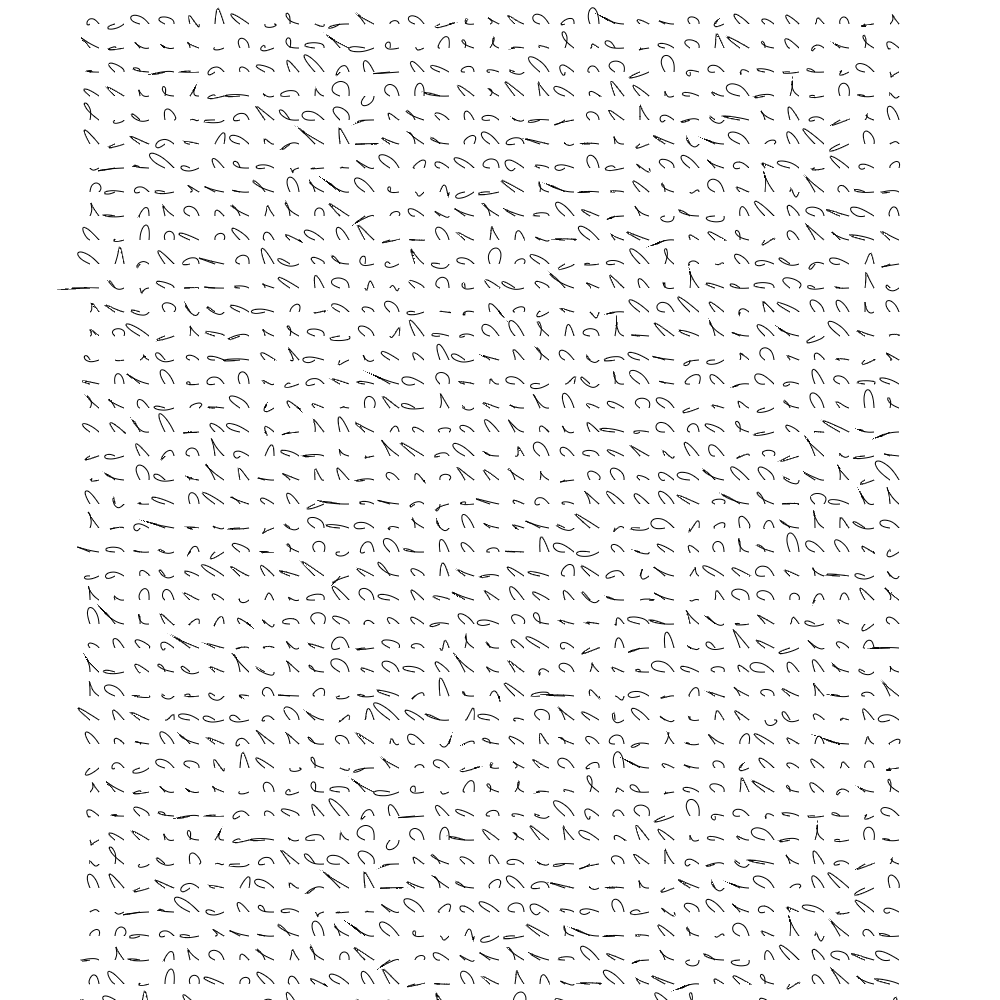
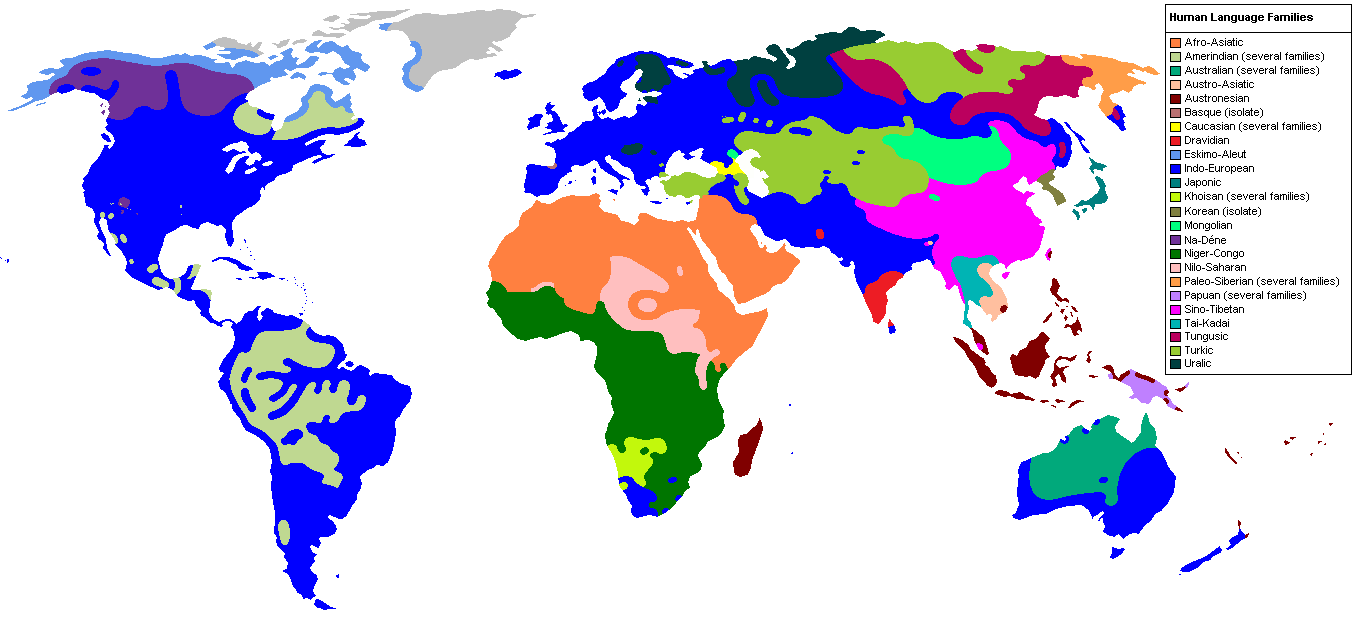
I saw this image of Language families across the globe today, and decided I wanted to do something related. What would happen if I apply a clustering algorithm to all the Unicode characters? I wanted to this done really quickly, So no reinventing the wheel. The plans is to get the SoTA clustering...
Before the end of last year, I posted a blog asking, “What do we know about CS1?” The goal was to list some things that I felt we had good evidence for, based on research I’d read over the years. It wasn’t a deep dive into the literature, just shooting from the hip on a subject I theoretically...
This post is a condensed version of a talk I gave at my research group. I've been lucky enough to attend both EMNLP 2018 and INLG 2018, and I thought it would be useful to share my main impressions of which cool things happened during the conference. I've split them into four sections: General...
This article is the fifth of a series in which I explain what my research is about in (I hope) a simple and straightforward manner. For more details, feel free to check the Research section. In my last post we faced a hard problem: If a person visits a museum, for instance, we could give them...
There's a popular song, written by an Argentinean musician called Charly García, called "Los Dinosaurios" ("The Dinosaurs"). The song was released in 1983 in the album "Clics Modernos", and you can listen to it in all its vinyl glory here. This song represents for me an interesting problem: it is...
Tell me if the following sounds familiar: Oh, hi! It's been such a long time! They told me that you are a researcher now, right? What are you working on? Me? Oh, well, ... ... I am developing a new carbulator theory that can hiperstat a maximum-entrophy logarithmic equation. ... it's...
Navigating the risk landscape that surrounds nanotechnology development can be a daunting task – especially if you are an early career researcher just getting started in the field. There are plenty of studies and speculations around what might – or might not – be risky about nanoscale science and...
If You’re House Is Still Available, Send Me an Email: Personality Influences Reactions to Written Errors in Email Messages Interestingly, the headlines overwhelmingly use negative language like “jerk”, “pedant”, “grammar Nazi”, and “snob” to describe the study findings. I guess I’d be considered...
A little bit of vindication from Meyerovich and Rabkin; a quote I found particularly interesting (emphasis added): A given prior language only occasionally correlated with the choice of a specific different language for the next project. Most notably, developers have high propensities to switch...
So KinectFusion is an awesome new Microsoft algorithm for the GPU that essentially does real-time SLAM with Kinect RGBD cameras. They didn’t publish the source, but the WillowGarage PCL and OpenCV guys have been busy implementing it from the paper. And I must say, the beta versions so far in the...
Even though I was forced to get up unreasonably early for an advisor meeting, today went remarkably well. I discovered the deadline for BioRob 2012 had been pushed back from Jan 15th to Jan 31st, which gives me a huge breather. That greatly reduces (or at least postpones) the slew of all-nighters...
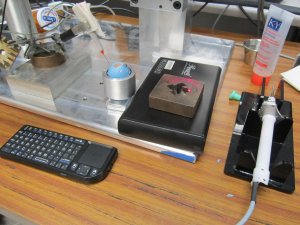
Today was “get back to the salt mines and get your shovel rusty” day. Our next set of experiments with our lab’s surgical robot Micron (white handled gizmo on the right in the black plexiglass holder) is designed for retinal procedures. To begin more realistic evaluation, I am trying to create a...
Well it’s back to the salt mines: this morning I departed from Orlando (left) and arrived at Pittsburgh (right). It is times like these that I wonder why I chose CMU. Then I remember the awesome robotics I get to do and I’m happy again. In other news, I finished up my part of the journal (14.5...
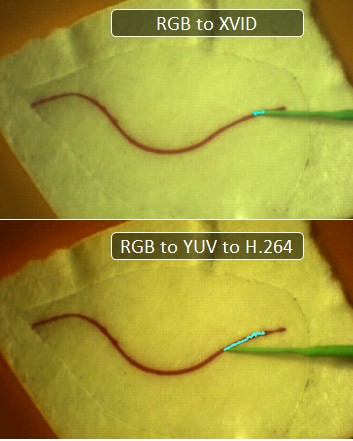
This post details my experiences with Intel’s hardware encoding Quick Sync functionality that is part of their new processors. I’ve spent the past three days struggling with the Intel Media SDK to implement encoding of video streams to H.264 and wanted to (a) document the experience and (b)...
Because my robot’s control system runs on a LabVIEW real-time machine, I have no recourse but to add new features in LabVIEW. Oh, I tried coding new stuff in C++ on another computer and streaming information via UDP over gigabit, but alas, additional latencies of just a few milliseconds are enough...
I have to review a couple of papers in the robotics field and was asking myself today: “What makes a good reviewer?” Let’s see. Ultimately, a reviewer serves two purposes: a judge and confidant. As a judge, a reviewer should objectively look at a body of research documented in a paper and check a...
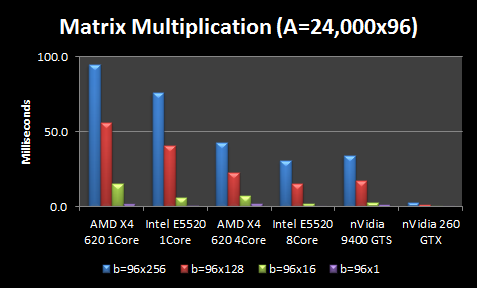
Sparse encoding and finding solutions of the form Ax=b with x subject to an l1 norm is a popular solution in signal reconstruction and now face recognition. Unlike the least-squares l2 norm which can be solved rapidly with SVD, finding the sparse l1 norm is a rather CPU expensive task. One of the...
So thanks to some urging by a fellow PhD student, I’ve uploaded a new version of my Facebook Downloader and swapped the site over to the new WordPress version. The old site is still there so old links work, which means eventually I’ll have to do individual redirects so that people following old...
It’s that time in my PhD program where the scary issue of the “thesis” begins it’s ritualistic haunting. What is your thesis going to be about? Do you have an outline yet? Who is your committee going to consist of? Ahh! Too much! So I do what I do best under stress: take a deep breath and see what...
Operating rooms are scary places at the best of times, and when going under the knife, you’d like to know that a surgeon’s itchy nose or her morning’s double espresso isn’t going to cause any accidents. This is where medical robotics can ride in to the rescue. As a PhD student developing...
So this is twice that I have been upstaged by my lack of Google skills. I have some small background in compilers, languages close to the processor, and optimization. So when I see something obviously lacking in even rudimentary speed-ups, I think about taking a look and doing a better job myself....
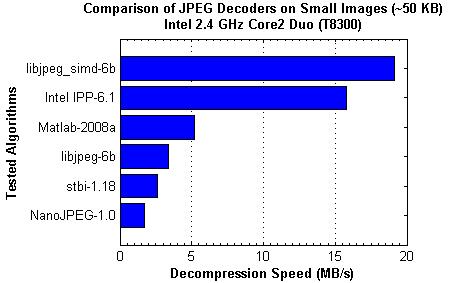
As a computer vision/controls grad student at CMU, I often work with very large image/video datasets. My latest project involves a terabyte or so of image data – all compressed in JPEG format to save space. I usually analyze the data in batches and am interested in maximum speed for minimum cpu...
So my first journal paper was written in 13 days. My advisor originally wanted it to be written in a single day but I certainly do not posses such superpowers – not in the least. The reason for the massive rush was my advisor promised a journal paper in the grant proposal by a certain timeframe...
After only getting 3 hours of sleep yesterday due to me creating the next homework for computer vision and an early morning meeting with my advisor, I learned that all the testing has to be done this week for the paper abstract deadline next week. Oh joy joy. So instead of going home to sleep off...